

The field of flowers was inside me, 50x64 inches, Oil on canvas, 2024
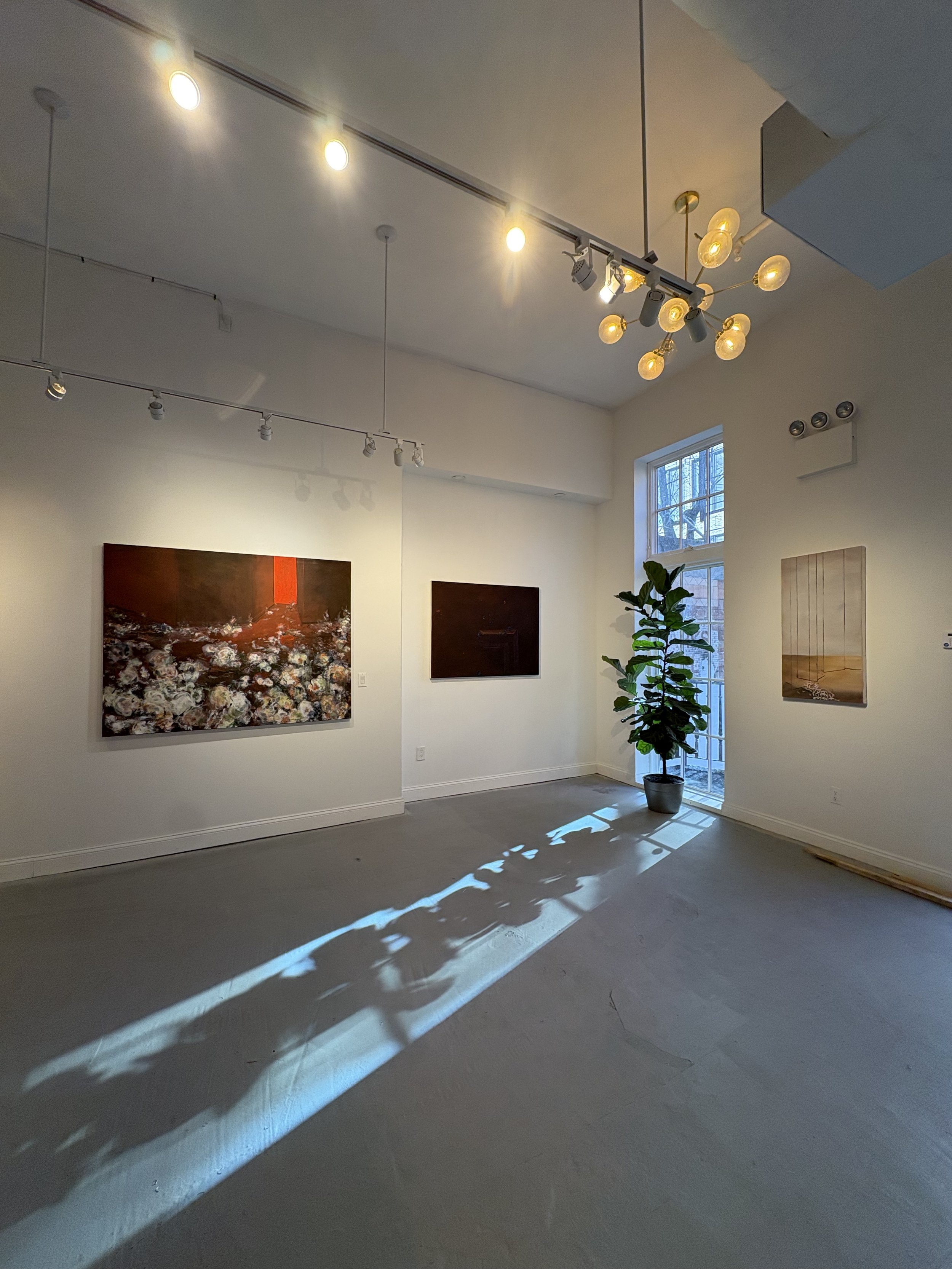
Works in dialogue

A human evidence, 64x52 inches, Oil on canvas, 2024

Thriving from the inside, 65x57 inches, Oil on canvas, 2025

In the presence of us, 65x57 inches, Oil on canvas, 2025

The walls did not go thru, 41x21 inches, Oil on canvas, 2025

I stand behind us, 53x74 inches, Oil on canvas, 2024

It was behind and above, 69x52 inches, oil on canvas, 2024

They float and anchor, 24x24 inches, Oil on cnvas, 2024
Evidence of Us explores interior spaces as both refuge and boundary—places we construct to protect ourselves, but which can also separate us from the world beyond them. Within these human-made environments, flowers appear as organic traces of presence: evidence that someone has passed through, cared, lived, remembered, or left something behind.
The works consider how we continuously mark the spaces we inhabit, often without realizing it. An object placed in a room, a flower brought inside, a worn surface, an empty corner—each can hold fragments of a life. Even in the absence of the figure, these traces become stories of us, suggesting the people, relationships, habits, and histories that once occupied a space.
Flowers carry this duality. They speak of care, beauty, intimacy, and memory, while also pointing toward labor, consumption, cultural codes, and the systems through which beauty is constructed and exchanged.
Through the tension between organic forms and architectural structures, Evidence of Us asks what remains when the body disappears. The figure may be absent, but its presence persists through what it touched, arranged, altered, and left behind—small pieces of evidence that we were here.